By Jehan Yusoof | Updated September 11, 2026 | ★ 4.6 (18 reviews) | 12 Comments
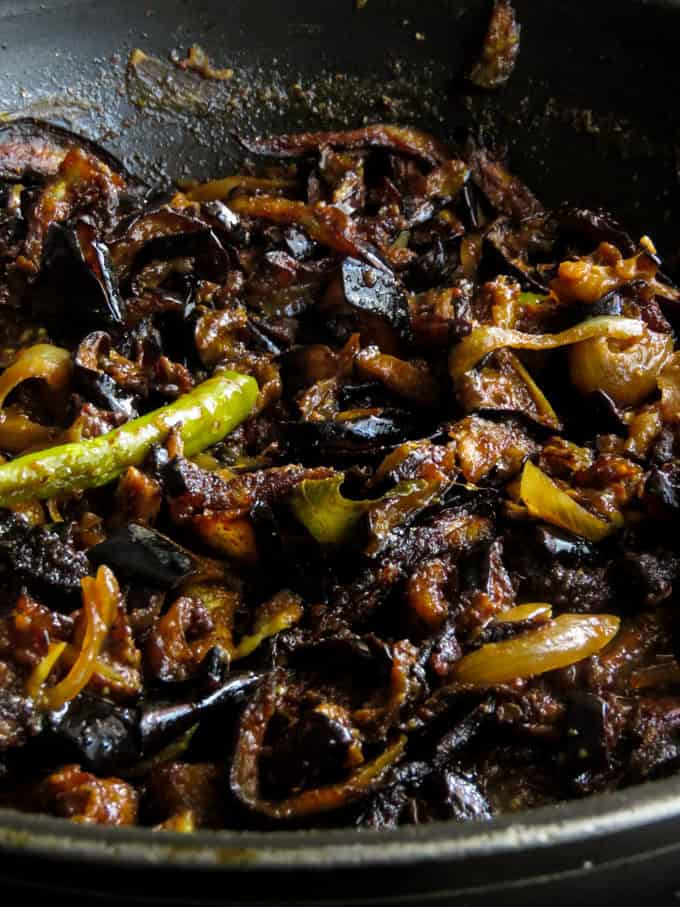
Brinjal pahi is a dish with fried eggplant simmered down to a sweet, sour, spiced tamarind sauce until glossy and coating every piece.
The traditional Sri Lankan vegetarian curry, also known as wambatu pahi or vambotu pahi, is cooked the same way no matter what you call it. The name simply changes depending on which part of Sri Lanka your family is from.
For a creamier version, try my creamy eggplant curry
★★★★★
If you try this, I’d love to know how it turned out. Just tap the stars on the recipe card; it helps other cooks find it.
What is Sri Lankan brinjal pahi?
It is a traditional and popular Sri Lankan eggplant dish served with a rice and curry menu.
The word “Pahi” is used for cooking curries without the gravy, giving the dish the ability to be preserved longer.
This Sri Lankan vegetarian, vegan curry has a sour, sweet and creamy taste that makes this brinjal dish unique in its flavour.
The authentic curry is made with fried brinjals combined with a sauce that includes tamarind, vinegar, coconut milk and spice powders.
What is the difference between Brinjal Pahi and Wambatu Moju?
The names of brinjal and wambatu moju are often confused and the names are often used switched to describe the other.
So here’s the difference between wambatu moju and brinjal pahi.
Wambatu moju is a pickle style relish of fried eggplant, shallots and green chillies mixed in with a mustard and vinegar dressing, with no coocnut milk
Brinjal pahi is made with fried eggplant simmered in tamarind, vinegar and coconut milk sauce

Ingredients to make the Sri Lankan brinjal pahi
Ingredient notes and substitutions exact amounts are in the recipe card.
- Brinjals (eggplant): use fresh and firm ones. eggplant that are old turns bitter when fried.
- Mustard: use ground black mustard seeds or store-bought black mustard powder.
- Pandan leaf and curry leaves : adds the distict aroma, if you can’t find fresh use the dried version that you can find in Asian stores. If you can’t find it leave it out, it is still a authentic dish.
- Vinegar: use coconut vinegar to get the authentic flavour. if not use a light white vinegar instead. avoid using apple cider vinegar.
- Tamarind pulp with seeds or paste: soak 3 to 4 pods in 1/4 cup warm water for 10 minutes, then squeeze and collect the thick juice.
- From paste, mix 1/2 teaspoon with 1/4 cup water, mix well. use as per the recipe instructions.
- Coconut milk: thick coconut milk (refer to notes below).
- Spice powders: turmeric powder, red chilli powder, coriander, cumin and fennel seed powder ( the fennel seeds can be ground at home for this purpose)
- Oil: coconut oil or any light oil available to you
- Salt and sugar: season and balance the flavour of the brinjal pahi
- Other ingredients used for the brinjal sauce: sliced onion, minced ginger, miced garlic, green chillie split in the middle, a piece of cinnamon
Ingredient notes
- Brinjals
- Use fresh brinjals so they don’t turn out bitter once they are fried.
- While frying the eggplant, make sure to maintain a steady medium fire.
- Make sure you fry them in small batches; the smaller brinjal slices tend to fry quicker than the large pieces, so batch and fry them separately.
- If you live in an apartment, make sure the air vents of your stove are on.
- Despite the brinjal pahi not having any unpleasant smell, the frying odour tends to cling. I realised this when I had to make the brinjal fry for my husband working overseas; I also had the doors to the bedrooms closed at all times.
- Avoid stacking the fried brinjals on top of each other; instead, spread them over the paper towels to remove any excess oil.
- Tamarind and vinegar
- The use of too much tamarind and vinegar can cause the brinjal fry curry to really taste sour, so please do taste the curry sauce as you make it. You want a perfect balance of sweet and sour coming through.
What you will need in the kitchen
- Chopping board & knife.
- Plate to hold the dry ingredients.
- 3 medium-sized bowls to hold the wet ingredients.
- Colander with kitchen paper towels to absorb excess oil.
- Frying Pan and a slotted spoon
- A cooking pan to cook the eggplant curry.
- Serving bowl or platter and spoon.
How to make brinjal pahi (eggplant curry)
Prepare all the ingredients
Cut, slice, mince all the ingredients before you start frying the eggplan strips.

Have the liquid ingredients ready as well; these will be tamarind juice, coconut milk, and vinegar. Preferably natural coconut vinegar.

Cut and seasoning the eggplants
Wash the eggplants and remove the stem. First, cut the eggplant into round slices that are Half an inch thick.

Once you cut them into circular slices, stack them into four and then cut them into thick strips.

Season the eggplant strips with turmeric and salt, and make sure all the strips are covered in turmeric and salt.

Fry the eggplant for wambatu pahi
Line a plate with paper towels.
Place a deep frying pan over low to medium heat and pour in the oil. Heat the oil over medium fire for 2 to 3 minutes.
Maintain heat and fry the eggplant in small batches.
Fry until they are golden brown and crispy; drain any excess oil from the fried brinjals and place them on paper towels.
Make sure not to pile up the fried brinjal batches on top of each other, but spread them over the plate. Set aside.

Make the brinjal pahi gravy (sauce)
Into a large frying pan,
Add ground mustard powder, curry leaves, pandan leaf, sliced onions, cinnamon piece, minced ginger, minced garlic, green chillies, coriander powder, cumin powder, red chilli powder, fennel powder, tamarind juice and vinegar.

Place the pan over low fire and heat for 3-5 minutes or just until you see the onions turn soft.

Pour in the coconut milk and cook over a low-medium fire for 3 minutes; season with salt.
Add sugar and cook until the coconut gravy for the brinjal pahi thickens and changes colour. Slow simmer until you have enough thick gravy that will coat the brinjals(aubergines).

Make sure to taste the brinjal pahi coconut gravy.
The sourness of both tamarind and vinegar should come through, but be balanced by the sugar, coconut milk and the spices. Once the brinjal gravy is thick and changes colour, add the brinjal to this gravy, maintaining very low heat.
The final steps of cooking the brinjal pahi

Avoid using a spoon to mix; shake the pan with the handle for the fried eggplant to spread out.
Use a fork or large spoon to combine the brinjals and the thick sauce while cooking over low heat for another 2 minutes.
Do the final tasting; you may have to season the brinjal pahi with salt and sugar(1 tsp) to balance the sour-sweet combo in the brinjal pahi curry.
Remove from the stove, gently transfer to a bowl and serve.

What to serve with brinjal pahi: Sri Lankan rice and curry menus
- Rice
- Vegetarian curries
- Meat and seafood
Explore the recipe website for more options.

Storage, Freezing, and Reheating Brinjal pahi
- Storing
- Once you make the brinjal pahi, let it cool, separate it into small portions and refrigerate. Use within 2-3 weeks.
- Freezing
- Brinjal pahi can be frozen for 3 weeks.
- Reheating
- Remove the brinjal pahi container from the freezer.
- Set it out to reach room temperature; this may take a couple of hours. The brinjal pahi is not usually warmed, but you can microwave it for 10 to 20 seconds.
- Stop food waste
- Since the brinjal pahi has a longer storage life, I would recommend storing them in small batches. An individual can consume only 2-3 servings.
More Sri Lankan brinjal (eggplant) recipes
- Eggplant fries in air fryer(no breading)
- Easy eggplant stir-fry
- Sri Lankan brinjal pickle/wambotu moju
- Sri Lankan creamy eggplant curry
- Spicy fried eggplant salad
Join me on ISLANDSMILE YOUTUBE CHANNEL

Brinjal Pahi (Sri Lankan Sweet and Sour Eggplant Curry)
Brinjal pahi is a dish with fried eggplant simmered down to a sweet, sour, spiced tamarind sauce until glossy and coating every piece.
The traditional Sri Lankan vegetarian curry, also known as wambatu pahi or vambotu pahi, is cooked the same way no matter what you call it.
The name simply changes depending on which part of Sri Lanka your family is from.
Ingredients
- Ingredients mentioned below use standard measuring cups and spoons.
- 500g of brinjals (these can be large eggplants or medium-sized ones)
- 1 teaspoon of turmeric powder
- Salt to season the eggplant fries and then flavoring the curry
- 2 to 3 cups of oil to fry the brinjal fries
- 1 teaspoon of ground mustard seeds (substitute with store bought black mustard powder)
- 1 tablespoon of coriander powder
- 1 teaspoon of cumin powder
- 1 teaspoon of fennel seed powder (1 teaspoon of fennel seeds can also be ground in a grinder at home for this purpose)
- A sprig of curry leaves
- 2-inch pandan piece
- 1 medium-sized onion sliced fine
- 1 tablespoon of minced ginger (1-inch piece minced)
- 1 tablespoon of minced garlic (3 to 4 cloves)
- 3 green chillies split in the middle
- A piece of cinnamon (2-inch)
- 1/3 cup coconut vinegar
- 2 tablespoons of tamarind juice (see notes under ingredient notes and substitution)
- Salt to season
- 1 tablespoon of red chillie powder
- 1/2 cup thick coconut milk (see notes above)
- 1 tablespoon of sugar
Instructions
Prep work before making the Brinjal pahi.
- Have all the ingredients cut and ready for the brinjal fry.
- Have the liquid ingredients ready as well; these will be tamarind juice, coconut milk, and vinegar. Preferably natural coconut vinegar.
Cutting the eggplant and seasoning it.
- Wash the eggplants (500g) and remove the stem. First, cut the eggplant into round slices that are Half an inch thick.
- Once you cut them into circular slices, stack them into four and then cut them into thick strips.
- Season the eggplant strips with turmeric and salt, and make sure all the strips are covered in turmeric and salt.
- Have a plate ready with paper kitchen towels spread over it.
- Place a deep frying pan over low to medium heat and pour in the oil.
- Heat the oil over medium fire for 2 to 3 minutes. Maintain this heat and fry the eggplant in small batches.
- Fry until they are golden brown and crispy; drain any excess oil from the fried brinjals and place them on paper towels.
- Make sure not to pile up the fried brinjal batches on top of each other, but spread them over the plate chte. Set aside.
How to fry the eggplant.
Making the brinjal pahi gravy.
- Into a large frying pan, add ground mustard powder (1 teaspoon), curry leaves (5 to 8 leaves), pandan leaf (2-inch piece), sliced onions (1 medium-sized onion), cinnamon piece (2-inch piece), minced ginger (1 tablespoon), minced garlic (1 tablespoon), green chillies (3), coriander powder (1 tablespoon), cumin powder (1 teaspoon), red chilli powder (1 tablespoon), fennel powder (1 teaspoon), tamarind juice (2 tablespoons) and vinegar (1 tablespoon).
- Place the pan over a low fire and heat for 3 to 5 minutes or just until you see the onions turn soft.
- Pour in the coconut milk (1/2 cup thick) and cook over a low-medium fire for 3 minutes; season with salt. Add sugar and cook until the coconut gravy for the brinjal pahi thickens and changes colour.
- Slow simmer until you have enough thick gravy that will coat the brinjals(aubergines).
- Make sure to taste the brinjal pahi coconut gravy. The sourness of both tamarind and vinegar should come through, but be balanced by the sugar, coconut milk and the spices.
- Once the brinjal gravy is thick and changes colour, add the brinjal to this gravy, maintaining very low heat.
Cooking the brinjal pahi.
- Avoid using a spoon to mix; shake the pan with the handle for the fried eggplant to spread out.
- Use a fork or large spoon to combine the brinjals and the thick sauce while cooking over low heat for another 2 minutes.
- Do the final tasting; you may have to season the brinjal pahi with salt and sugar(1 tsp) to balance the sour-sweet combo in the brinjal pahi curry.
- Remove from the stove, gently transfer to a bowl and serve.
Notes
Tips to make the best eggplant/brinjal pahi curry.
- Have all the ingredients ready and prepared for the brinjal curry.
- While frying the eggplant, make sure to maintain a steady medium fire.
- Make sure you fry them in small batches; the smaller brinjal slices tend to fry quicker than the large pieces, so batch and fry them separately.
- If you live in an apartment, make sure the air vents of your stove are on.
- Despite the brinjal pahi not having any unpleasant smell, the frying odour tends to cling. I realised this when I had to make the brinjal fry for my husband working overseas; I also had the doors to the bedrooms closed at all times
- Avoid stacking the fried brinjals on top of each other; instead, spread them over the paper towels to remove any excess oil.
- The use of too much tamarind and vinegar can cause the brinjal fry curry to really taste sour, so please do taste the curry sauce as you make it. You want a perfect balance of sweet and sour coming through.
Made this Brinjal pahi?
I'd love to know how it turned out.
Leave a ⭐⭐⭐⭐⭐ rating and a comment; I read every one, and it helps other visitors trust the recipe and find me, too.
Recommended Products
As an Amazon Associate, I earn a percentage from qualifying purchases.
-
 Fullstar 9-in-1 Deluxe Vegetable Chopper Kitchen Gifts | Onion Chopper & Dicer | Peeler, Spiralizer, Zoodle Maker, Lemon Squeezer, Egg Slicer & Seperator- Ultimate Kitchen Gadget
-
 Bamboo Cutting Board Set with Juice Groove (3 Pieces) - Wood Cutting Boards for Kitchen, Wood Cutting Board Set, Kitchen Chopping Board for Meat (Butcher Block) Cheese and Vegetables
-
 The Original Popco Tongs for Cooking - Set of 3 (7, 9, 12 inches) - Heavy Duty, 304 Stainless Steel BBQ and Kitchen Tongs with Silicone Tips (3 COLORS AVAILABLE)
-
 Kitchen Shears, iBayam Kitchen Scissors Heavy Duty Meat Scissors Poultry Shears, Dishwasher Safe Food Cooking Scissors All Purpose Stainless Steel Utility Scissors, 2-Pack (Black Red, Black Gray)
-
 Spice Container - Masala Dabba - 7 Compartments, masala box,steel masala dabba,Spice container box,stainless steel spice box indian masala dabba with 7 spice containers with size 8 X 8 inches (1)
-
 Pandanus Leaves, Dried | Aromatic and Delicious Blade-like Leaf | Popular Ingredient in Southeast Asian and South Asian Delicacies 0.5 oz.
-
 Naturally Grown Curry Leaves (0.7 oz)
-
 Tamicon Tamarind Paste 200 Grams (7 Ounces)
-
 Simply Organic - Coriander - 2.29 oz.
-
 Jiva USDA Organic Mustard Seeds Black 7 Ounce - Nearly 1/2 Pound
-
 Chef Knife PAUDIN N1 8 inch Kitchen Knife, German High Carbon Stainless Steel Sharp Knife, Professional Meat Knife with Ergonomic Handle and Gift Box for Family & Restaurant
Nutrition Information:
Yield: 5 Serving Size: 1Amount Per Serving: Calories: 260Total Fat: 12gSaturated Fat: 9gUnsaturated Fat: 3gCholesterol: 0mgSodium: 71mgCarbohydrates: 40gFiber: 10gSugar: 19gProtein: 5g
Nutrition facts are an estimate and not guaranteed to be accurate. Please see a registered dietitian for special diet advice.
ABOUT THE AUTHOR
JEHAN
Recipe creator. Food Blogger. Video creator
I’ve been cooking and sharing Sri Lankan recipes, along with other dishes I love making at home on Island Smile since 2015. I’ve tested every recipe on this site more than once in my own kitchen before it goes on the blog.
I grew up eating this food, and I still cook it the same way my family taught me, just written down clearly enough that you can follow it too.
If a recipe doesn’t work the way I say it will, tell me in the comments; I read every one, and I’ll help you fix it.
Tania
Friday 6th of May 2022
Black or Yellow Mustard Seed?
jehan
Friday 6th of May 2022
Hi Tania, Black mustard seeds. Regards, J
Devonna
Tuesday 5th of April 2022
This dish came out beautifully. Your instructions were so detailed and precise. Thank you for making me feel like a proper chef!
jehan
Saturday 9th of April 2022
Hi Devonna, Thank you for the lovely message and glad the recipe came out well. Sorry for the late reply as we are moving house. please be kind enough to rate the recipe to help the recipe stay up in google's good graces. regards, J
Sofie
Friday 27th of August 2021
Prepared this curry today. Everybody loved it, even our daughter who hates warm vegetables. The spices are just perfect and we love the vinegar and tamarind juice combined with the sugar. We'll be preparing this dish a few times a month. Thank you for sharing your recipe!
jehan
Friday 27th of August 2021
Hi Sofie, thank you for trying the recipe, so glad the family loved it and you are most welcome. please be kind enough to leave a rating. this will help other readers to find the recipe as well. thank you J
Tara
Saturday 3rd of April 2021
We made this twice now. Everyone in my family loved this. I personally never liked aubergines before this. Thank you!
jehan
Saturday 3rd of April 2021
Hi Tara, thank you for your kind words. glad the family loved it. and you are most welcome. regards, J
Rev
Wednesday 25th of November 2020
Have made this twice so far and it has turned out delicious! Didn't have pandan so left that out both times. Thanks for the recipe.
jehan
Wednesday 25th of November 2020
Hi Rev, Thank you for writing to me regarding the outcome of the recipe. you are most welcome. Regards J