Moist and fluffy Sri Lankan butter cake you can make by hand or with a mixer.
With soft crumb and buttery flavours made with easy-to-find baking ingredients in your pantry.

You can have any rich, over-the-top cake as a centrepiece gracing your table.
But nothing beats a melt-in-your-mouth moist butter cake with its pale golden colour and light-as-a-feather texture, which makes biting into it such a delight.
Recipe summary at a glance.
- Serving size – for 10 individuals.
- Prep time is 25 minutes.
- Baking time: 45 to 50 minutes.
- Cooking method– Baking.
- Cooking difficulty– easy, beginner cake recipe.
- Access to ingredients is easy.
- Flavour profile – sweet.

Ingredients to bake the butter cake.
- Butter or margarine.
- Butter: adds flavour, richness and structure to the cake.
- Margarine: can be substituted with butter. I have used margarine, also known as fat spread, to make the cake,e which gives a softer and moister cake.
- Sugar.
- sweetens the cake and maintains the softness of the cake. Fine sugar is recommended to make the creaming of the butter and sugar easy.
- Eggs.
- Binds and adds the structure to the cake.
- Gives the cake stability and lift to the cake. adds richness and softness to the cake.
- Flour:
- Provides structure and shape to the cake.
- Too much flour can make the cake dry. Too little will collapse the cake. Measure the flour accurately.
- Baking powder.
- A leavening agent that makes the cake rise evenly and keeps the cake light.
- Milk.
- Adds moistness and keeps the cake soft.
- Keeps the cake tender.
- Vanilla.
- Not only does it add a distinct vanilla aroma, but the extract also enhances the buttery flavour of the cake.

Tips and questions on baking a butter cake at home.
- Tips for beginners to bake a butter cake.
- All ingredients need to be at room temperature.
- Cream the butter/ margarine and sugar until the mixture turns pale and fluffy.
- Measure flour accurately.
- Let the cake cool completely before slicing into it.
- Using a electrical mixer for the best results.
- Use medium speed for creaming butter/margarine with the sugar.
- Always scrape the sides between the steps of making the butter cake.
- Switch to low speed once you add flour.
- Stop once all ingredients are combined, and you have a light and fluffy batter.
- Using a electrical mixer for the best results.
- Questions.
- Can I make this cake without a mixer?
- Yes, I have given the instruction below.
- Why did my cake sink in the middle?
- Too much liquid, so the centre is underbaked.
- Why is my cake crumbling?
- Overmixing the batter after you add the flour. Make sure to gently fold the batter and immediately stop.
- Why is my cake dry?
- The oven is too hot.
- Overbaking rather than the recommended time.
- Adding too much flour.
- So make sure to bake at a lower temperature and measure the ingredients accurately.
- What is the best temperature to bake a cake?
- The best temperature to bake the cake is between 160–170°C (320–340°F) for 40 minutes to 1 hour.
This allows the cake to bake evenly, with a moist crumb. - IF you are using a fan oven, reduce the temperature by 10 to 15°C.
- The best temperature to bake the cake is between 160–170°C (320–340°F) for 40 minutes to 1 hour.
- Can I make this cake without a mixer?
Making the butter cake without an electric mixer.
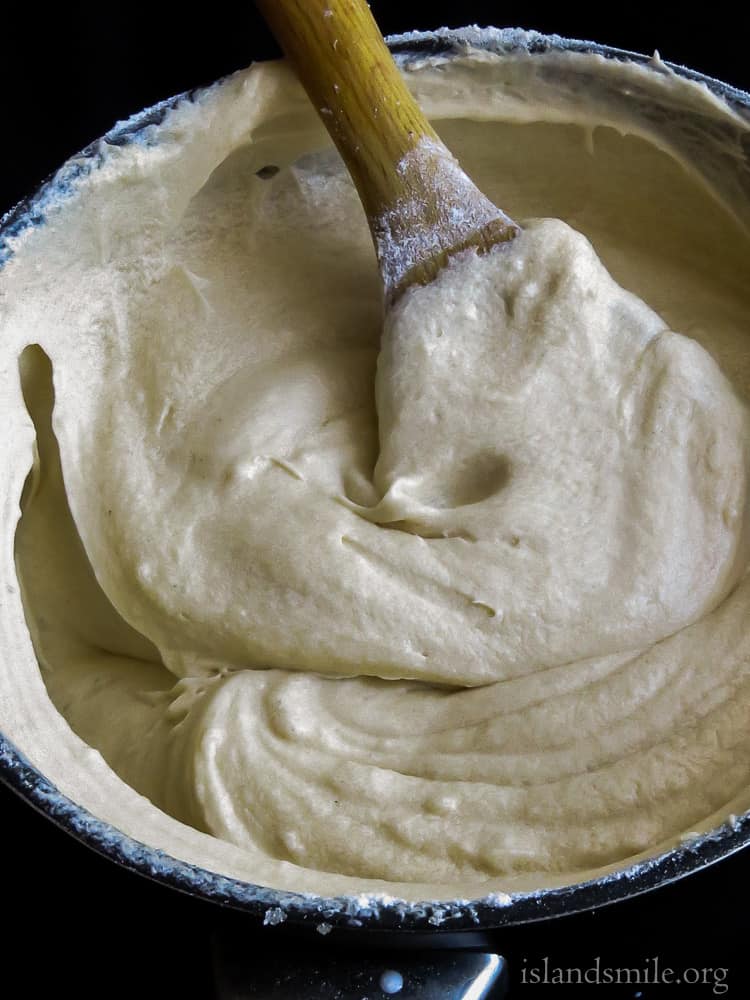
Yes, you can make this cake using a wooden spoon or spatula to make the batter. Hand mixing reduces overmixing and prevents the cake from turning dense, although it may take a little longer.
- Creaming the butter and sugar by hand.
- Use softened butter, not melted butter.
- Use very fine or granulated sugar for the creaming process. Stir butter and sugar in a wide bowl.
- Stir for 5 to 10 minutes until pale and fluffy.
- Adding eggs to the batter.
- Use room temperature eggs.
- Add the egg one at a time and stir thoroughly, adding the next. If the batter looks curdled, continue with the next step. The flour will stabilise the batter as you add it later.
- Folding the flour into the batter the correct way.
- Add flour and milk alternately to the batter.
- Use a spatula or wooden spoon. To fold in the flour, cut through the centre of the batter, lift and fold the batter from the bottom to the top.
- Use this motion until the flour is fully incorporated.
- Do not overmix.

More cake recipes.
Chocolate cake(one-layer 9-inch cake).
lemon cake(9-inch, single-layer cake)
Sri Lankan ribbon cake.
Passion fruit sponge cake(single-layer cake).
Pink marble cake(Neopolitan cake)
What you will need in the kitchen.
- Oven to bake the cake.
- Oven mitts or thick cloth to remove the cake from the oven.
- A kitchen scale to weigh the ingredients accurately.
- An electric mixer or a wooden or silicone spatula, if you are mixing by hand.
- One large bowl to mix the cake batter.
- Flour sifter.
- 9-inch square baking pan.
- Parchment paper or baking paper.
- Kitchen paper towels.
- Measuring cups and spoons.
- Cooling rack.
- 3 medium-sized bowls to be used as needed.
Step-by-step photo tutorial
Prep work before baking the butter cake.
- Have all the utensils needed ready.
- Remove eggs, butter and milk from the refrigerator 30 minutes before you begin baking the cake. They should be at room temperature.
- If your sugar grains are large, use a blender to granulate the sugar or use very fine sugar.
- Line the 9-inch baking pan with baking paper.
How to line a 9-inch pan with baking paper.
- Lay the baking pan upside down. Place the baking paper on top of the pan and measure how much paper you will need to line the inside of the pan.
- Allow extra parchment paper on all four sides. Fold the paper firmly along the edges of the baking pan to clearly mark the seams.
- Cut straight slits at all four corners of the parchment paper.

- This will help you neatly fold the paper’s corners inside the pan.

Use a little butter to stick the baking paper to the pan. set aside.

How to make the Sri Lankan butter cake.
Preheat oven to 170°C / 340°F.
Sift the flour and baking powder and set aside.

Add the butter to a large bowl and soften it using a hand mixer for a few seconds.
Add the granulated sugar to the butter and beat both ingredients over medium speed for 2 minutes until the mixture turns pale and fluffy.
This would result in a soft crumb.

Add one egg at a time and beat for a few seconds before adding the next egg. Use medium speed.

Add vanilla before adding the last egg to the mixture, and beat at a low speed for 60 seconds in one direction.
As you beat the eggs, if you notice the mixture curdling, this is normal; just continue with the next step, and the batter will stabilise as you add flour.

Add the flour in three stages, adding the milk alternatively and beat at each stage for 60 seconds at low speed.

Avoid beating or vigorous mixing; only use the mixer until well incorporated.
Then use a spatula to gently fold the batter to remove any flour lumps or pockets of flour.

Once the cake batter is ready, immediately transfer it to the baking pan.
Tap the pan three or four times on the counter to force the air bubbles out and level the cake with the spatula.

How to bake the butter cake.
Place the cake tray on the middle shelf of the oven.
Bake the cake at 170 °C for 40-50 minutes.

Midway through the baking, check if the cake is done by inserting a toothpick(if it comes clean, the cake is done) or bake longer(within the time frame given).
Remove the butter cake from the oven and place it over a heat-resistant surface.
Let the cake cool for 10 minutes.
Then invert the cake onto a wire rack. Remove the baking pan and the parchment paper from the bottom and let the cake cool completely, 1 to 1 hour and 30 minutes.
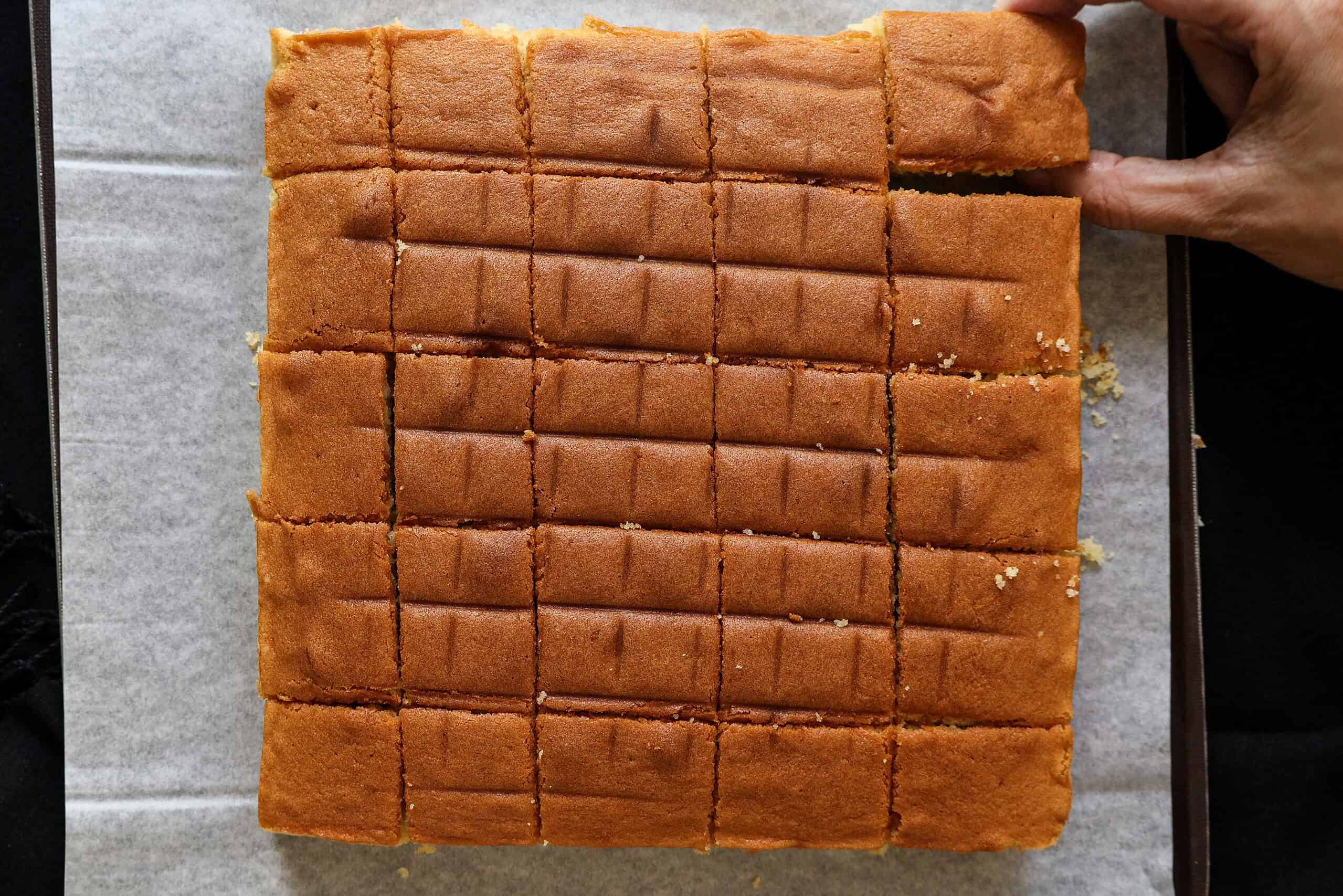
Slice the cake into the required size and enjoy it with a cup of tea. from the sides of the cake.
Storage Guide for Butter Cake.
Storing at room temperature: once cool, cut into the required size, place in an airtight container. Consume within 2 to 3 days.
Refrigerator: can be refrigerated for a week. Let the cake reach room temperature or microwave for 10 to 15 seconds.
Freezer: wrap the whole cake with cling film and store it in the freezer. can be stored for 1 month. Let it reach room temperature and slice the cake.
JOIN ME ON THE ISLANDSMILE YOUTUBE CHANNEL

Butter cake
Moist and fluffy Sri Lankan butter cake you can make by hand or with a mixer.With soft crumb and buttery flavours made with easy-to-find baking ingredients in your pantry.
Ingredients
- 250g butter or Margarine
- 230g of sugar(granulated sugar)
- 4 eggs
- 1 tablespoon of Vanilla essence
- 1 and 1/2 a teaspoons of baking powder
- 250g of flour
- 4 tablespoons of milk
Instructions
Prep work before baking the butter cake.
- Have all the utensils needed ready.
- Remove eggs, butter and milk from the refrigerator 30 minutes before you begin baking the cake. They should be at room temperature.
- If your sugar grains are large, use a blender to granulate the sugar or use very fine sugar.
- Line the 9-inch baking pan with baking paper.
How to line a 9-inch pan with baking paper.
- Lay the baking pan upside down. Place the baking paper on top of the pan and measure how much paper you will need to line the inside of the pan.
- Allow extra parchment paper on all four sides. Fold the paper firmly along the edges of the baking pan to clearly mark the seams.
- Cut straight slits at all four corners of the parchment paper.
- This will help you neatly fold the paper's corners inside the pan.
- Use a little butter to stick the baking paper to the pan. set aside.
How to make the Sri Lankan butter cake.
- Preheat oven to 170°C / 340°F.
- Sift the flour and baking powder and set aside.
- Add the butter to a large bowl and soften it using a hand mixer for a few seconds.
- Add the granulated sugar to the butter and beat both ingredients over medium speed for 2 minutes until the mixture turns pale and fluffy.
- This would result in a soft crumb.
- Add one egg at a time and beat for a few seconds before adding the next egg. Use medium speed.
- Add vanilla before adding the last egg to the mixture, and beat at a low speed for 60 seconds in one direction.
- As you beat the eggs, if you notice the mixture curdling, this is normal; just continue with the next step, and the batter will stabilise as you add flour.
- Add the flour in three stages, adding the milk alternatively and beat at each stage for 60 seconds at low speed.
- Avoid beating or vigorous mixing; only use the mixer until well incorporated.
Then use a spatula to gently fold the batter to remove any flour lumps or pockets of flour. - Once the cake batter is ready, immediately transfer it to the baking pan.
- Tap the pan three or four times on the counter to force the air bubbles out and level the cake with the spatula.
How to bake the butter cake.
- Place the cake tray on the middle shelf of the oven.
- Bake the cake at 170 °C for 40-50 minutes.
- Midway through the baking, check if the cake is done by inserting a toothpick(if it comes clean, the cake is done) or bake longer(within the time frame given).
- Remove the butter cake from the oven and place it over a heat-resistant surface.
- Let the cake cool for 10 minutes.
- Then invert the cake onto a wire rack. Remove the baking pan and the parchment paper from the bottom and let the cake cool completely, 1 to 1 hour and 30 minutes.
- Slice the cake into the required size and enjoy it with a cup of tea. from the sides of the cake.
Nutrition Information:
Yield: 1 Serving Size: 10Amount Per Serving: Calories: 39806Total Fat: 2240gSaturated Fat: 1359gUnsaturated Fat: 881gCholesterol: 12920mgSodium: 23930mgCarbohydrates: 4295gFiber: 67gSugar: 2336gProtein: 549g
Nutrition facts are an estimate and not guaranteed to be accurate. Please see a registered dietitian for special diet advice.
Each recipe on this blog has been written with great care and love to the best of my ability, with you in mind.
It’s free and on the blog, for you to try anytime.
Each recipe on this blog has been written with great care and love to the best of my ability, with you in mind.
It’s free and on the blog, for you to try anytime.
All I ask is that you do not save it in any apps, recipe boxes, or online groups, as this would affect me as a food blogger and the growth of this blog.
I would appreciate it if you could share only the link rather than the full recipe.
All images and text on this website are protected by copyright.
Tamara
Wednesday 2nd of August 2023
Hi, this cake look delicious. Can I use cake flour instead of AP?
jehan
Thursday 3rd of August 2023
Hi Tamara, I have not tried the recipe with cake flour but I believe cake flour includes the rising agents maybe remove them from the recipe and try? But as a precaution I always tell my readers to try the original recipe before changing any elements in it so they have a feel for the recipe. Hope this helps. J
Louise Jolly
Thursday 12th of May 2022
Thank you for this recipe.
Could you please clarify what you mean by 2 cups of butter? Do I squash the room temperature butter into the cup measure and flatten at the top…or cube the butter and fill two cups with the cubes?
Also, could I ice this cake to serve at a children’s birthday party? Or would I be better dusting with icing sugar and serving with berries?
jehan
Friday 13th of May 2022
Hi Louise, Just let the butter reach room temperature and then fill it up with the butter and squash or smooth with the spoon till you have a cup of butter. Yes, the cake will definitely stand a layer of icing, dusting of icing or with berries. Just make sure the cake is completely cool before icing. hope this helps. J
Mal
Sunday 25th of July 2021
Fluffy, moist and just perfect! Thank you for this recipe which is so easy to follow. I don’t always make Butter Cake but out of all the Butter Cakes I’ve ever made, this one turned out the best! Thanks for your recipe Jehan!
jehan
Sunday 25th of July 2021
Hi Mal, Thank you for this wonderful comment. so happy that the butter cake came soft and fluffy. you are most welcome. if you can please rate the recipe on the card. this helps other readers find the recipe easily. thank you, regards J
Sham
Thursday 10th of June 2021
Hi again, can this recipe be halved? Would a 7" round mould be good?
Using a stand mixer, we cream the butter and sugar until there's no trace of sugar at the bottom of the bowl correct?
With the mixer, beat in the eggs on low speed?
Also, do you already have the measurements in grams?
Just to confirm, we preheat the oven at 180°C but bake it at 170°C ?
Sham
Monday 7th of June 2021
Hi. Do you use medium or large eggs?
jehan
Monday 7th of June 2021
Medium-sized eggs should do. Regards J